Start here
Diagnose
The Operating Diagnostic: a structured read of the business to find the few things actually deciding the date — not the loudest ones.
Home·For Organizations
One company, many paths.
Door one is fractional operations leadership for organizations — a fractional COO, fractional Chief of Staff, or narrower fractional operations support, depending on the job. A company is never one path; it's dozens running at once, and only a few decide the date. Founders and executives hire me to hold those few until they land, not to advise from the sidelines. It runs as one process — diagnose, attack plan, ongoing support — across Raleigh, Durham, Chapel Hill, and the Research Triangle, and remote.
Not sure which door is yours? Start here →
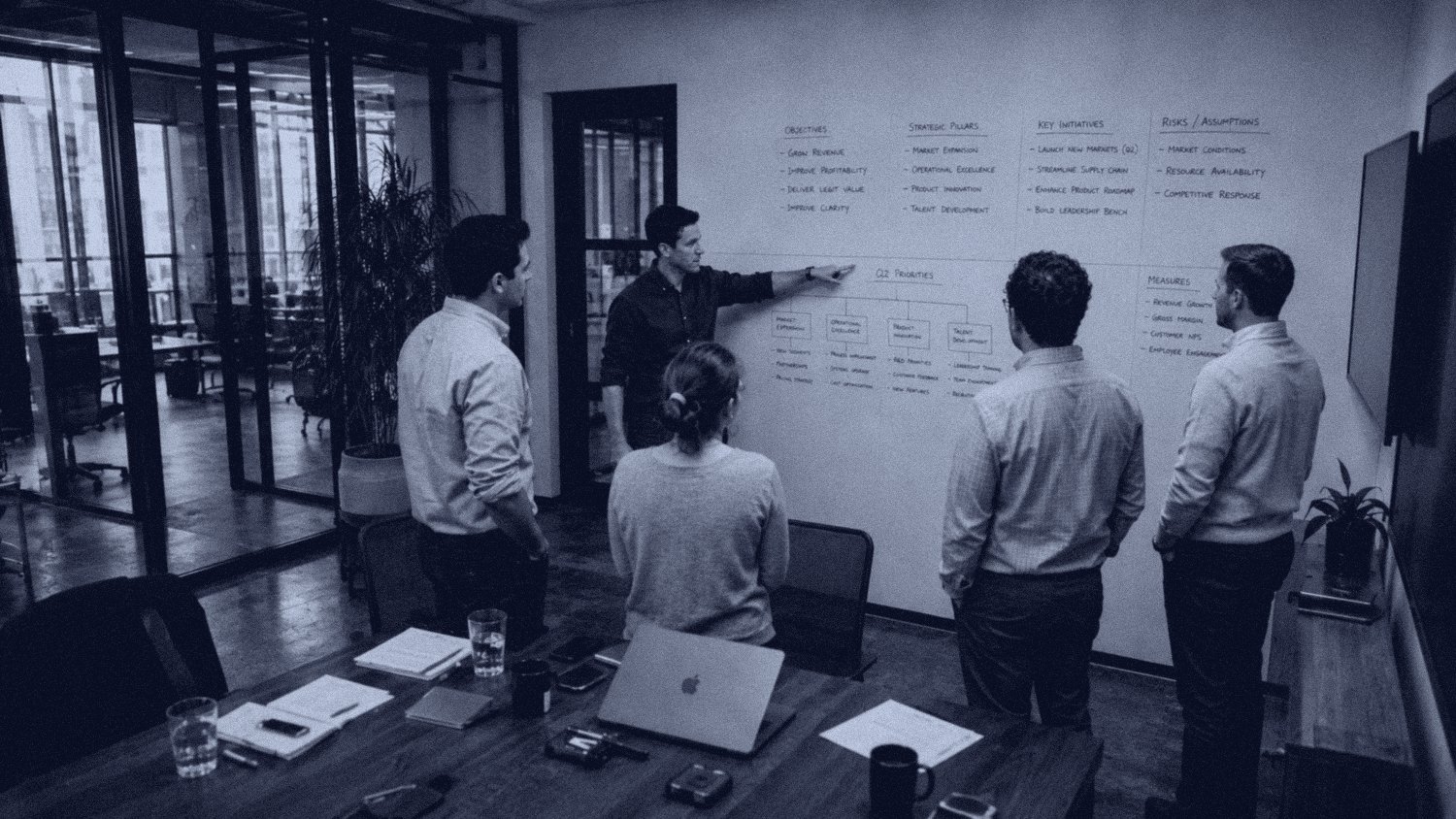
Scope and cadence are agreed before anything starts, in writing.
The Operating Diagnostic: a structured read of the business to find the few things actually deciding the date — not the loudest ones.
A sequenced plan of what to hold, in what order, and who owns it — the critical path made explicit and handed to you to keep.
A fractional COO or Chief of Staff who holds the work to the finish — accountable for outcomes, not advice, for as long as the seat needs sitting.
Not every company needs the whole process. When the problem is narrower — one broken cadence, one stalled program — I take it on as a defined, standalone engagement with a date agreed up front.
Goal-setting, staff meetings, and quarterly reviews that produce decisions instead of status.
Intake, prioritization, reporting cadence, and the discipline to stop work that should stop.
Find what's actually blocking a late cross-functional effort, resequence it, and hand it back running.
Take manual internal work out of the business. Process first, tooling second, measured on hours actually returned.
A senior operations leader who works inside your company part-time — a set number of days a week over months — and is accountable for outcomes, not just advice. It's the leader before you can justify a full-time hire.
With the Operating Diagnostic: a structured read of the business that finds the few things actually deciding the date. It produces an attack plan you own — and from there you can bring me in to hold the work, or run it yourself.
No. The diagnostic and attack plan stand on their own. Ongoing support — a fractional COO or Chief of Staff holding the work — is a separate decision you make once you've seen the plan.
When you need senior operations leadership before the headcount, runway, or certainty is there to hire full-time — often around $2M–$50M in revenue or 15–150 people, when the founder is in every decision or growth has outrun the systems. A fractional COO holds the role part-time and often bridges to the eventual full-time hire.
At Critical Path, ongoing support is quoted to the scope and scale of the engagement — there's no standing rate card, because it depends on days per week and what you need held. It starts with the Operating Diagnostic — a fixed $7,500–$12,000 — so you see the plan before committing to anything ongoing.
Narrower, defined pieces I can take on à la carte instead of the whole process: standing up a PMO, building the operating rhythm, recovering a stalled program, or automating internal operations. Each is scoped with a date agreed up front.
A consultant advises and hands you a deck. Here the work is held to the finish — the role is carried, the program is handed back running, the process is measured on hours actually returned.
Raleigh, Durham, Chapel Hill, and the Research Triangle in person, and remote for the rest. More on fractional COO work in Raleigh and the Research Triangle.
Twenty minutes, no cost. We'll find the critical path from there.